tag:quantummatter.nd.edu,2005:/news-events/newstag:quantummatter.nd.edu,2005:/latestStavropoulos Center for Complex Quantum Matter | News2026-10-01T15:12:00-04:00A research center for solid-state quantum sciences, looking for breakthroughs into the next quantum revolution of technologies that will benefit our society wtag:quantummatter.nd.edu,2005:News/1859402026-10-01T15:12:00-04:002026-10-02T10:12:47-04:00Dafei Jin lands Moore Foundation award to build a new platform for quantum networkingDafei Jin, associate professor in the Department of Physics and Astronomy in the College of Science at the University of Notre Dame, is one of 21 researchers who received grants from the 2026 Gordon and Betty Moore Foundation’s Experimental Physics Investigators Initiative.
Jin will join experimental physicists from the previous four cohorts in advancing the frontiers of fundamental research, according to the foundation.
Jin, who is affiliated with the Stavropoulos Center for Complex Quantum Matter and has led pioneering research on quantum bits (qubits), aims to develop a new platform for long-distance quantum information exchange. His team plans to trap single barium ions atop atomically thin solid helium, adhered to the surface of a nanofabricated device. Jin will manipulate their optical transitions as the environment shifts from vacuum to superfluid helium, then to solid helium. He will also investigate microwave control and optical readout of ions’ internal states, as well as their coupling to superconducting circuits.
“I’m very excited about the opportunities this award offers,” said Jin, who is also a concurrent associate professor in the Notre Dame College of Engineering. “First, I can work on a high-risk, high-reward project that can open new directions in quantum physics and potentially transform the frontier of quantum technologies.”
“Second, I can exchange ideas and seek collaborations with leading scientists in the cohorts that the Moore Foundation has been establishing.”
The Experimental Physics Investigator Initiative now has nearly 100 investigators at work since it started in 2022, and has already seen a range of bold, original science that the Moore Foundation hoped to make possible, said Theodore Hodapp, program director for the foundation’s initiative.
“From the start, our aim has been to accelerate progress at the frontier of experimental physics by giving brilliant mid-career scientists the kind of flexible, sustained support that federal grants rarely can,” he said in the foundation announcement. “That freedom lets them take on risky, high-reward experiments and follow ideas when research results lead them down new pathways.”
The Moore Foundation’s initiative provides each of this year’s 21 scientists with $1.35 million over five years, providing flexibility to accelerate physics research.
Jin’s previous work focused on manipulating quantum information locally by trapping single electrons on an ultraclean material, frozen neon, which is 10 to 10,000 times quieter than traditional materials for hosting qubits. However, single electrons do not provide convenient channels for transmitting quantum information over long distances. For his new project, Jin will focus on single ions, which will allow quantum information to be encoded in light (visible or infrared photons) and carried over hundreds of miles.
While his previous work mainly advanced quantum computing, Jin’s new research aims to advance quantum networking, leveraging the ultraclean materials he specializes in. This would allow remotely separated quantum computers to connect and form quantum networks capable of tasks beyond what classical networks can do.
“It is inspiring to witness the development of new scientific discoveries brought about by these awards,” Catherine Mader, program officer for the Initiative, said in the foundation announcement.
Originally published by Deanna Csomo Ferrell at science.nd.edu on October 01, 2026.
]]>
Deanna Csomo Ferrelltag:quantummatter.nd.edu,2005:News/1853872026-09-09T09:54:00-04:002026-09-09T09:54:29-04:00Center Research Featured on the Cover of Advanced Functional Materials
Research from the Stavropoulos Center for Complex Quantum Matter has been selected for the cover of Advanced Functional Materials. Published in Volume 36, Issue 72, highlighting the Center's recent work on the origin of unusual electronic and magnetic behavior in the widely studied Ti3C2Tx MXene.
The research article, “Titanium Suboxides Responsible for Electronic Anomaly Near Room Temperature in the Ti3C2Tx MXene,” reveals that nanoscale titanium suboxide phases confined between MXene layers play a key role in several puzzling property changes observed near room temperature. In particular, minority Ti3O5 phases undergo structural and electronic transitions that modify the MXene's interlayer spacing, electronic structure, and spin dynamics.
The study was led by Bence G. Márkus, László Forró, and Dávid Beke, together with Bradlee J. McIntosh, Lili Vajtai, Anna Nyáry, Sándor H. Sipos, Nirmal J. Ghimire, and Ferenc Simon. The work provides new insight into the microscopic origin of temperature-dependent behavior in Ti3C2Tx and highlights how minority phases can strongly influence the functional properties of two-dimensional materials.
]]>
Bence Markustag:quantummatter.nd.edu,2005:News/1851342026-08-28T10:57:00-04:002026-08-28T10:57:40-04:00Manuscript Highlight: Perovskite Solar-Cell Safety Study Featured on the Cover of EES Solar
A new study involving Prof. László Forró, director of the Stavropoulos Center for Complex Quantum Matter, reveals important environmental and biological safety considerations for one of the most promising classes of next-generation solar-cell materials. The work, titled Severe reprotoxicity of organometallic photovoltaic perovskites on Caenorhabditis elegans assessed by high-content in vivo microfluidics, is featured on the cover of the August 2026 issue of EES Solar.
Metal-halide perovskites have emerged as exceptional photovoltaic materials because of their high power-conversion efficiencies, relatively simple processing, and potential for integration into tandem solar cells. Yet the presence of lead in widely studied compounds such as methylammonium lead iodide, CH3NH3PbI3, has raised concerns about what could happen if solar modules are damaged, degraded, or improperly disposed of. Replacing lead with another metal is one possible strategy - but the new study demonstrates that “lead-free” does not necessarily mean biologically harmless.
The international research team investigated both the lead-containing perovskite CH3NH3PbI3 and its tin-based analogue CH3NH3SnI3 using Caenorhabditis elegans, a well-established model organism in environmental toxicology. The researchers employed an automated high-content “worm-on-chip” microfluidic platform, following individual organisms over approximately five days while continuously measuring survival, growth, development, egg production, and offspring. Machine-learning-based image analysis automatically identified worms, eggs, and progeny throughout the experiments.
Reproduction emerges as the most sensitive warning signal
The results are striking. Both photovoltaic materials formed particles when introduced into the physiological medium, and their biological effects depended strongly on particle size and bioavailability. Small-particle fractions produced clear, dose-dependent effects on survival, growth, and reproduction. In contrast, larger particles - above approximately 200 nanometers - produced little detectable toxicity under the experimental conditions, consistent with their reduced ability to be ingested by the worms.
Most importantly, reproductive effects appeared at substantially lower concentrations than lethal effects. Even at the lowest concentrations tested, fertility was strongly reduced, while higher sublethal exposures could result in complete sterility. The study therefore identifies reproduction as a particularly sensitive endpoint for assessing the potential ecological consequences of these materials.
The work also provides an important caution concerning lead-free perovskites. Although replacing Pb with Sn can remove the hazards directly associated with lead, the tin-based material still produced substantial biological effects. The results show that changing the metal can reduce some forms of toxicity without eliminating the need for careful toxicological evaluation.
Designing solar materials for performance and safety
The strong dependence on particle size is especially important for real-world applications. Solar modules exposed to mechanical damage, chemical degradation, sunlight, weather, or end-of-life processing can gradually generate smaller particles and soluble degradation products. The study therefore suggests that evaluating only the bulk chemical composition of a photovoltaic material may not be sufficient: the form in which the material becomes biologically available also matters.
The results should not be interpreted as establishing direct toxicity thresholds for humans. Rather, the C. elegans experiments provide a sensitive in vivo platform for identifying potential hazards and quantitative benchmarks that can guide subsequent environmental and mammalian studies. The authors emphasize the need for effective containment of potentially harmful elements during the entire lifetime of photovoltaic devices, together with continued research toward genuinely non-toxic photovoltaic materials.
This perspective is closely aligned with the mission of the Stavropoulos Center for Complex Quantum Matter, which connects fundamental materials research with technological challenges in information technologies, energy harvesting and storage, while explicitly considering environmental impact. The study illustrates how materials science can extend beyond discovering compounds with extraordinary electronic or optical properties to asking an equally important question: How can those materials be deployed safely and sustainably at scale?
The research was carried out through a collaboration involving the Stavropoulos Center for Complex Quantum Matter at the University of Notre Dame, École Polytechnique Fédérale de Lausanne (EPFL), and Nagi Bioscience, among other collaborators. László Forró, Laurent Mouchiroud, and Matteo Cornaglia conceived and designed the project.
]]>
Bence Markustag:quantummatter.nd.edu,2005:News/1820022026-05-24T10:25:00-04:002026-05-24T10:25:53-04:00Frozen neon as the key to a quiet quantum world, new study shows An electron (represented by the ball) is controlled by a resonator (red wires) above a solid neon surface (the transparent square piece under the ball). Noise (disturbances) in the environment (represented by the distortion) becomes quiet around the electron and neon (clear area). Image by Xu Han/Argonne National Laboratory.
The world hasn’t yet embraced quantum computing because the technology hasn’t overcome a fundamental issue: Noise. It causes quantum bits (qubits), building blocks of a quantum computer, to lose their information.
In a recent study in Nature Electronics, a team led by Dafei Jin, an associate professor of physics in the Department of Physics and Astronomy at the University of Notre Dame, and collaborators have provided new insight into how well a qubit platform they invented in 2022 is resilient against noise. Their qubit, a trapped, single electron on the surface of frozen neon, is 10 to 10,000 times quieter than traditional qubits.
Traditional qubits are prone to disturbances from their material environments. Jin and his collaborators embarked on a novel approach using frozen neon, an ultraclean solid, to hold qubits. Jin’s team trapped a single electron above the neon surface using a superconducting circuit that can be operated without any dissipation. The spatial motion of the trapped electron represents the "0" and "1" states of quantum information.
“We managed to compare the solid-neon environment with other materials and show its superiority,” said Jin.
The work was completed at the University of Notre Dame and Argonne National Laboratory. During the research, Jin’s team studied frequencies outside of the so-called sweet spot, to investigate how the neon environment affected the qubit compared with other materials.
The "quietness" of the neon environment allows the qubits to maintain their quantum states for a much longer time. This enables more complex calculations with fewer errors, potentially clearing the way for large-scale, high-performance quantum computers that could solve problems that even the fastest classical computers cannot.
The neon qubit would also be less expensive to manufacture, since electrons are freely available from lightbulb filaments.
Jin and his collaborators have already begun follow-up research to remove imperfections from the neon surface and reduce remaining noise from stray electrons.
"By thoroughly characterizing the qubit's noise properties, this study shows why its performance is so good," said Xu Han, a scientist at Argonne co-author. "Our results prove that our technology is promising for quantum information processing at larger scales."
This collaborative effort included researchers from Argonne National Laboratory, University of Chicago, Harvard University, Northeastern University, and Florida State University. The research was supported by the U.S. Department of Energy, Air Force Office of Scientific Research, and the National Science Foundation.
Originally published by Deanna Csomo Ferrell at science.nd.edu on May 21, 2026.
]]>
Deanna Csomo Ferrelltag:quantummatter.nd.edu,2005:News/1817372026-05-14T12:22:00-04:002026-05-14T12:41:20-04:00Tiny Oxides Solve MXene Anomaly
Researchers at the Stavropoulos Center have uncovered the origin of a long-debated electronic anomaly in one of the most widely studied MXenes, Ti3C2Tx. Our new paper, published in Advanced Functional Materials, shows that the unusual behavior near room temperature is caused not by the MXene alone, but by tiny titanium suboxide domains — primarily Ti3O5 — that form naturally within the layered material.
MXenes are promising two-dimensional materials for electronics, sensing, energy storage, and electromagnetic shielding. Yet Ti3C2Tx has repeatedly shown puzzling changes in its electrical and magnetic properties around room temperature, 350-380 K, where most electronics operate. Using a broad set of in situ techniques — including Raman spectroscopy, X-ray diffraction, calorimetry, conductivity measurements, electron paramagnetic resonance, and magnetometry — the team found that these anomalies coincide with phase transitions of confined titanium suboxides.
The discovery reframes Ti3C2Tx as a subtle MXene–oxide composite, where even a small fraction of oxide nanodomains can strongly affect electronic behavior. Rather than viewing oxidation only as degradation, the work suggests it could become a tool for engineering new functionality.
By controlling these hidden suboxide phases, researchers may be able to design MXene-based devices with near-room-temperature phase-change behavior, including thermal latching, opto-thermal switching, and robust electronic response under real-world conditions.
]]>
Bence Markustag:quantummatter.nd.edu,2005:News/1803192026-03-26T11:40:00-04:002026-03-26T14:42:10-04:00Remembering the Legacy of Sir Anthony Leggett
We mourn the passing of Sir Anthony Leggett, who died on March 8, 2026, and we remember with deep gratitude one of the most original and groundbreaking physicists of our time. Sir Leggett, Tony, reshaped condensed matter physics through his pioneering work on superfluidity, superconductivity, and the quantum mechanics of macroscopic systems, helping define how physicists think about collective quantum behavior on the largest scales. His ideas did not simply advance the field; they changed its intellectual landscape, opening new ways of understanding quantum matter and inspiring generations of researchers. Awarded the 2003 Nobel Prize in Physics for pioneering contributions to the theory of superconductors and superfluids, he leaves behind a legacy of extraordinary scientific depth and lasting influence. We remember him especially through the talk he gave in 2023 in the first Trends of Quantum Matter workshop series, which remains a meaningful part of his legacy in our community.
]]>
Bence Markustag:quantummatter.nd.edu,2005:News/1803072026-03-25T16:40:00-04:002026-05-14T12:14:20-04:00Manuscript Highlight: The Forró Group's paper on Plastic Spin Labeling is on the Cover of ACS Physical Chemistry Au
Our paper featured on the cover of ACS Physical Chemistry Au showcases the collaborative research environment of the Stavropoulos Center, with multiple center members contributing to the study. In “Transient Spin Labeling of Plastics with Chlorine Dioxide,” we report a new method for detecting and studying plastics by temporarily labeling them with chlorine dioxide and reading the signal with electron spin resonance spectroscopy.
We demonstrated that chlorine dioxide radicals can effectively diffuse into PET and act as a stable spin label, making it possible not only to detect the material but also to probe its local environment. The results point to a promising new tool for studying plastics and microplastics in challenging environments.
Just as importantly, the project highlights the role of the Stavropoulos Center as a hub for collaborative science. With multiple affiliated researchers participating in the work, the study reflects the center’s ability to bring together complementary expertise to address timely problems at the intersection of physical chemistry, materials science, and environmental research.
]]>
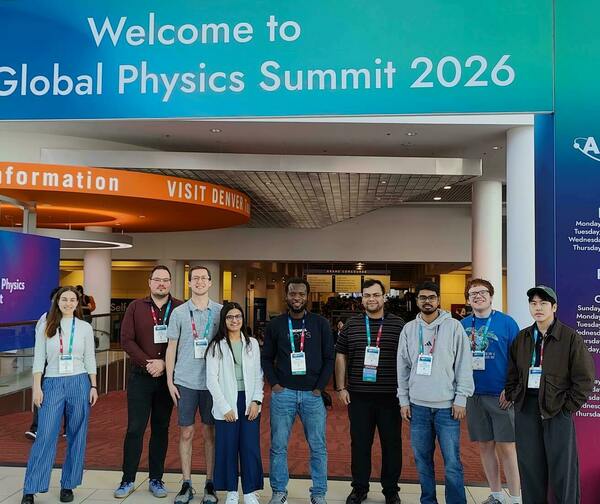
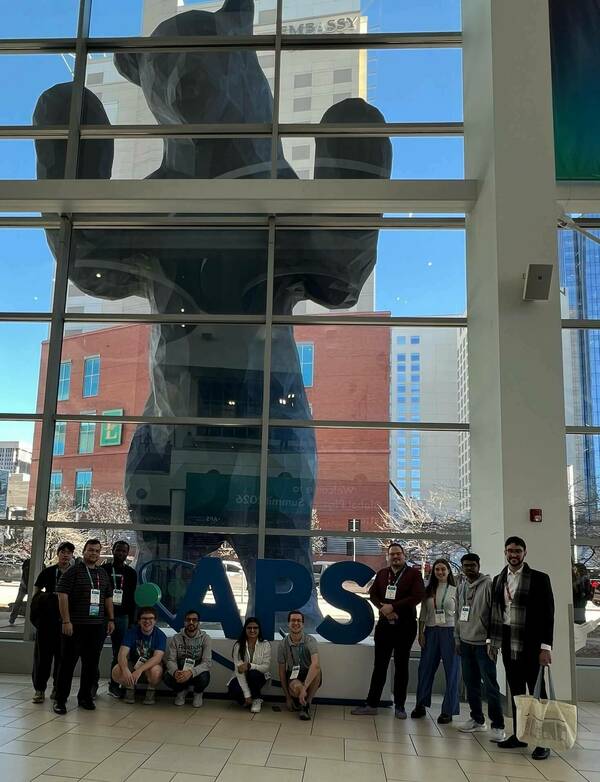
Bence Markustag:quantummatter.nd.edu,2005:News/1803052026-03-23T16:22:00-04:002026-03-25T16:22:32-04:00Stavropoulos Center Displays Strong Presence at APS Global Physics Summit in Denver
The Stavropoulos Center for Complex Quantum Matter was prominently represented at the 2026 APS Global Physics Summit in Denver, held March 15-20 and drawing more than 14,000 physicists from around the world. The current Summit program lists multiple Stavropoulos Center PIs as invited speakers, reflecting the Center’s growing visibility in key areas of quantum materials research. Graduate students from the Center also made a strong showing as invited and contributed speakers.
Beyond the talks themselves, the Summit served as a major venue for networking, collaboration, and visibility. APS describes the Denver meeting as an on-site and virtual gathering built around scientific exchange, career development, and connections across academia, national labs, and industry. For the Stavropoulos Center delegation, that meant not only sharing new science, but also building relationships that will help shape future collaborations and opportunities.
]]>
Bence Markustag:quantummatter.nd.edu,2005:News/1788882026-02-02T14:28:00-05:002026-02-02T19:28:14-05:00El Gazzah, physics doctoral student, awarded DOE fellowship
University of Notre Dame doctoral student Mohamed El Gazzah has been awarded a highly competitive national fellowship from the U.S. Department of Energy to conduct research on novel magnetic textures at Oak Ridge National Laboratory (ORNL), in Oak Ridge, Tennessee.
As an awardee of the DOE Office of Science Graduate Student Research (SCGSR) program, El Gazzah, who works in the lab of Associate Professor Nirmal Ghimire in the Department of Physics and Astronomy, will spend a year with a mentor at the national laboratory beginning in January 2026.
El Gazzah’s research focuses on advanced magnetic structures known as skyrmions. These tiny, swirling magnetic configurations have vast technological potential. Unlike traditional magnets, like iron, which are well understood, skyrmions are topologically complex textures. Researchers are in the stages of understanding how to create, control, and detect them efficiently.
However, skyrmions are already known to hold promise for improving data storage technologies, El Gazzah said.
“They are “distinct magnetic entities, which are unique to their background,” said El Gazzah, whose lab is affiliated with the Stavropoulos Center for Complex Quantum Matter. “And so, you can identify a single skyrmion, meaning that you can translate that into bits.”
Unlike current memory technologies that rely on ferromagnetic domains, which require large current densities —skyrmions offer a far more energy-efficient alternative, El Gazzah said.
Magnetic skyrmions were first discovered in 2009. Because of their potential application in spin based electronic devices and data storage, research in this field received worldwide attention, El Gazzah said.
“To better understand their properties, it is very important to be able to see them, and at the same time measure their electrical properties,” he said.
As a part of this fellowship, El Gazzah will work with a mentor at ORNL to develop and use a new technique where imaging and electrical measurements can be done simultaneously, through a Lorentz transmission electron microscope.
A similar microscope is located at the Notre Dame Integrated Imaging Facility, and after completing his project at ORNL, El Gazzah plans to leverage his gained experience in developing similar capabilities at the university.
In his research so far, El Gazzah has already made significant progress. He has discovered a way to design and create skyrmions in a specific set of materials deliberately, rather than discovering them by chance. In fact, he will continue work to create skyrmions in similar systems with the aim of reducing their size and stabilizing them without the requirement of external magnetic fields, which are critical steps toward eventually using them in electronic devices.
Receiving the fellowship was a joyful surprise, he said.
“I actually never anticipated getting this, but I remember when I first got the email notification… I jumped in the air,” he described. He said he is grateful to Ghimire, his peers, and lab mates, all of whom have been an important part of his physics journey.
Originally published by Samantha Keller at science.nd.edu on February 02, 2026.
]]>
Samantha Kellertag:quantummatter.nd.edu,2005:News/1780242025-12-09T16:37:00-05:002025-12-16T16:37:22-05:00Notre Dame Materials Science and Engineering program awards 10 graduate fellowships for the 2025-2026 academic year
The University of Notre Dame’s Materials Science and Engineering (MSE) program has awarded one-year fellowships for the 2025-2026 academic year to ten graduate students pursuing the MSE PhD. This year’s recognition brings the total number of fellowships awarded to 29 since the program’s inception in 2020.
The fellowships support collaborative materials research with the potential to generate proposals for external funding. As a key feature of the MSE program, the interdisciplinary mentors provide each student with additional resources and expertise to augment the doctoral candidate’s research and professional development.
“These fellows and research projects truly exemplify the cross-disciplinary nature of materials research at Notre Dame and its potential to have a positive impact,” said Masaru Kuno, Professor of Chemistry and Biochemistry and interim chair of the MSE Executive Committee. “The multidisciplinary focus of these projects fosters a collaborative environment that provides students with the broad expertise needed to tackle complex materials challenges.” Fellowship proposals are reviewed and selected by the MSE program’s Executive Committee.
To learn more about materials science and engineering at Notre Dame or the interdisciplinary doctoral program, please visit mse.nd.edu.
2025-2026 Materials Science and Engineering Fellows
Project: Ultrafast studies of materials under pressure Student: Kareem Asham, Chemistry and Biochemistry Advisors: Greg Hartland and Adam Jaffe, Chemistry and Biochemistry Interdisciplinary Mentor: Petr Stepanov, Physics and Astronomy
Project: Near-infrared II N-doped graphene quantum dot apta-sensor for spatially resolved dopamine monitoring Student: Yao Huo, Chemical and Biomolecular Engineering Advisor: Yichun Wang, Chemical and Biomolecular Engineering Interdisciplinary Mentor: Kaiyu Fu, Chemistry and Biochemistry
Project: Automated optimization of molecular alignment and materials properties in mixed conducting thin films Student: Xingyu Liu, Chemical and Biomolecular Engineering Advisor: Bryan Paulsen, S.J., Chemical and Biomolecular Engineering Interdisciplinary Mentors: - Yanliang Zhang, Aerospace and Mechanical Engineering - Alex Dowling, Chemical and Biomolecular Engineering
Project: Multi-objective active learning for discovering thermally conductive and mechanically compliant polymers Student: Yuhan Liu, Chemistry and Biochemistry Advisor: Tengfei Luo, Aerospace and Mechanical Engineering Interdisciplinary Mentor: Meng Jiang, Department of Computer Science and Engineering
Project: Biomaterial screening platform that integrates 3D-structured electrodes and microfabrication techniques for high-throughput electrochemistry Student: Zongqi Vito Liu, Chemistry and Biochemistry Advisor: Kaiyu Fu, Chemistry and Biochemistry Interdisciplinary Mentors: - Pinar Zorlutuna, Aerospace and Mechanical Engineering - Jon Camden, Chemistry and Biochemistry
Project: Fundamental insights into magnetoelectric nanoparticles properties at the nano-bio interface for enhanced chemotherapeutic delivery and equitable treatment outcomes in metastatic cancer variants Student: Aurelie Brownsberger, Bioengineering Graduate Program Advisor: Prakash Nallathamby, Aerospace and Mechanical Engineering Interdisciplinary Mentors: - Ryan Roeder, Aerospace and Mechanical Engineering - Sharon Stack, Chemistry and Biochemistry - Laszlo Forro, Physics and Astronomy
Project: Reconstructing amorphous lattices via RHEED for the discovery of topological amorphous metals in next-generation interconnects Student: Eibar Ortiz Ortega, Electrical Engineering Advisor: Chris Hinkle, Electrical Engineering Interdisciplinary Mentor: Yi-Ting Hsu, Physics and Astronomy
Project: Structure-property relationships of soft porous coordination polymers Student: Yan Saltar, Chemical and Biomolecular Engineering Advisor: Yamil Colon, Chemical and Biomolecular Engineering Interdisciplinary Mentors: - William Phillip, Chemical and Biomolecular Engineering - Kyle Doudrick, Civil and Environmental Engineering and Earth Sciences
Project: 3D-printed concrete for buildings and extraterrestrial applications Student: Capra Williams, Civil and Environmental Engineering and Earth Sciences Advisor: Ashley Thrall, Civil and Environmental Engineering and Earth Sciences Interdisciplinary Mentor: Clive Neal, Civil and Environmental Engineering and Earth Sciences
Project: Hybridized plasmon phonon polaritons in magic angle twisted bilayer graphene/ perovskite heterostructures Student: Xuanpu Zhang, Physics and Astronomy Advisor: Petr Stepanov, Physics and Astronomy Interdisciplinary Mentor: Masaru Kuno, Chemistry and Biochemistry
Originally published by MSE Staff at mse.nd.edu on December 09, 2025.
]]>
MSE Stafftag:quantummatter.nd.edu,2005:News/1767482025-11-21T16:43:00-05:002025-11-21T16:49:09-05:00Graphitronics - How Graphite Could Support the Next Generation of Spintronic DevicesA research team at the Stavropoulos Center, led by Prof. László Forró, with contributions from Prof. Ferenc Simon, a visiting professor, and with Dr. Bence Márkus as first author, has made a remarkable discovery: natural graphite — the same widely available material used in pencil leads — exhibits the longest-lived itinerant electron spins ever observed. Their study, “Unprecedented Spin-Lifetime of Itinerant Electrons in Natural Graphite Crystals,” published in Advanced Functional Materials, demonstrates room-temperature spin lifetimes approaching one microsecond—about one hundred times longer than previously reported in graphene or semiconductor systems. This finding positions graphite as an unexpectedly powerful platform for future quantum and spintronic technologies.
The Stavropoulos Center team also included Dr. Dávid Beke, a postdoctoral researcher, Lili Vajtai, a graduate student, and Prof. András Jánossy, a known expert in spintronics.
A Spintronic Holy Grail Found in Nature
Spintronics, the science of harnessing electron spin for data processing, relies on materials that maintain spin information over long distances. Until now, even the best graphene-based systems have barely reached 10 ns before spins lost orientation. The team’s use of electron spin resonance (ESR) on ultra-pure graphite crystals revealed a large spin-relaxation anisotropy: spins polarized perpendicular to the graphite planes live 50 times longer than those lying in-plane.
How Graphite Does the Impossible
The experiments show that graphite’s remarkable spin orientation retention capability stems not from exotic chemistry, but from its intrinsic symmetry and extraordinary crystalline perfection. Electrons polarized out of the plane relax so slowly that their diffusion length could extend to millimeters — macroscopic distances at ambient temperature. The team’s analysis pinpoints edge diffusion as the limiting factor: spins eventually relax when they reach sample boundaries, implying that even purer or larger graphite crystals might sustain spins even longer.
Toward Real-World Spin Devices
The study redefines graphite as a ready-made, naturally occurring spintronic medium, compatible with emerging van der Waals heterostructures. Two immediate applications are proposed:
A current-perpendicular-to-plane spin valve, pairing graphite with 2D ferromagnets such as Fe3GaTe2 for efficient room-temperature spin filtering.
A graphite-based Datta–Das-like spin field-effect transistor, where electric gating subtly reorients spins, enabling ultra-low-power logic operation under ambient conditions.
Why It Matters
This discovery establishes natural graphite as the first known material to support microsecond-scale itinerant spin lifetimes at room temperature — without cryogenic cooling, exotic doping, or artificial structuring. It promises a paradigm shift: from fragile, engineered spin materials to robust, naturally occurring systems that could power the next generation of computing.
]]>
Bence Markustag:quantummatter.nd.edu,2005:News/1762082025-11-01T21:20:00-04:002026-05-14T12:14:39-04:00Manuscript highlight: The Liu group's paper is on the cover of Nature Materials
We are proud to announce that Nature Materials has selected Professor Liu's group's (Nileema Sharma, Matthew Toole, James McKenzie, and Xiaolong Liu) paper, titled Atomic-scale frustrated Josephson coupling and multicondensate visualization in FeSe, as the cover for its November 2025 issue. The manuscript can be accessed here, and please find a short summary below.
Josephson coupling frustration and exotic states can form when an s-wave superconductor is coupled to a multi-band superconductor. The Liu group experimentally detected signatures of such Josephson frustration at the atomic scale for the first time, and established a new technique of visualizing multiple superconducting condensates simultaneously with atomic resolution using a scanned Josephson tunneling microscope at milli-Kelvin temperatures. The image shows experimentally measured superfluid density of one of the condensates in a FeSe superconductor.
]]>
Bence Markustag:quantummatter.nd.edu,2005:News/1760742025-09-23T15:21:00-04:002025-10-27T15:21:36-04:00Notre Dame faculty receive prestigious early career awards from the National Science Foundation
During the 2024-2025 academic year, four researchers in the University of Notre Dame’s Colleges of Engineering and Science received early career awards from the National Science Foundation (NSF).
The Faculty Early Career Development (CAREER) Program is one of the NSF’s most prestigious awards in support of junior faculty who exemplify the role of teacher-scholars through outstanding research, excellent education, and the integration of education and research in the context of their organization’s mission.
Jeffrey F. Rhoads, the John and Catherine Martin Family Vice President for Research and professor in the Department of Aerospace and Mechanical Engineering, said, “We congratulate these exceptional faculty members for the recognition that the CAREER award bestows upon their work, which is both inventive and ambitious. Notre Dame’s success with this program is a testament to both the groundbreaking research conducted here and the translation of this work into our classrooms and communities, investments in both current innovation and future talent for our nation.”
Kong will conduct a project titled “Security Foundations of Safe Learning Enabled Cyber-Physical Systems.” Kong will study new security vulnerabilities of learning-enabled cyber-physical systems and develop novel defense techniques to enhance real-world safety. Kong will evaluate the deployment of these techniques on multiple applications including autonomous vehicles and other robotic systems, with the goal of helping ensure the reliable operation of cyber-physical applications in the real world.
To promote student interest in cyber-physical systems, Kong and his team will integrate their research into educational programs at all levels, including summer learning opportunities with programmable robotic cars for K-12 students, as well as an annual robotics challenge and additional research programming for undergraduates at Notre Dame.
Liu’s project, “Atomic-scale Josephson Spectroscopic Imaging of Unconventional and Non-reciprocal Superconductivity,” will examine the directionality of electron flow in superconductors at the atomic level, with the objective of gaining insight into the very nature of superconductivity and its underlying mechanisms.
At the same time, Liu will broaden the educational impact of superconductor research through a STEM Teachers residency program, during which middle school teachers will participate directly in research and co-develop curriculum materials. Liu’s group will also design and construct demonstration setups for use in classrooms, research facilities, and museums.
Osheron will conduct a project titled “Probing low mass final states with the CMS detector,” targeting complex particle interactions predicted by theories that go beyond the current foundational theory of particle physics, called the Standard Model. At the Compact Muon Solenoid detector (CMS), one of the four main detectors at the CERN Large Hadron Collider (LHC), in Geneva, Switzerland, Osherson will develop advanced data analysis techniques, including re-imagining facial recognition tools to help interpret complex data produced by the CMS detector, with the goal of uncovering novel particles and interactions.
Simultaneously, Osherson will integrate his research into outreach programming tailored for high school students and teachers, including promoting greater participation in QuarkNet’s virtual particle physics workshops.
Ramsey will conduct a project titled “Model theory, independence, and approximation.” Ramsey is specifically interested in smoothly approximable structures, which are infinite geometries that can be seen as 'limits' of finite geometric structures. Drawing inspiration from smoothly approximable structures, Ramsey will develop the necessary tools to understand and explore even more complex analogues of these geometries, which will enable meaningful applications to algebra, representation theory, and combinatorics.
Alongside his research, Ramsey will expand educational access to model theory by organizing a summer school for graduate students at Notre Dame, as well as collaborating with students in world regions where learning exposure to high-level mathematical logic is limited.
Since the program’s inception in 1995, 147 researchers at the University of Notre Dame have received NSF CAREER awards. To learn more, please visit the NSF's information page.
The University of Notre Dame is a private research and teaching university inspired by its Catholic mission. Located in South Bend, Indiana, its researchers are advancing human understanding through research, scholarship, education, and creative endeavor in order to be a repository for knowledge and a powerful means for doing good in the world. For more information, please visit NDR's website or NDR's LinkedIn.
Originally published by Erin Fennessy at research.nd.edu on September 23, 2025.
]]>
Erin Fennessy Lawlortag:quantummatter.nd.edu,2005:News/1751042025-09-19T16:28:00-04:002025-10-27T15:22:39-04:00Two members of the Center receive a NSF grant to develop a new class of condensed matter
Prof. Dafei Jin and Prof. Edwin Huang receive a 3-year $0.75M research grant from NSF to develop heterogeneous rare-gas quantum solids - a new class of condensed matter.
This project targets creating a new class of matter by freezing a heterogeneous mixture of rare gases: helium (He), neon (Ne), and argon (Ar), into multilayer solids at low temperatures. The new kind of matter, called heterogeneous rare-gas quantum solids, is analogous to heterogeneous semiconductors but can exhibit more unusual electronic properties on the surface, at the interface, or in the bulk. These quantum solids, defined by the fact that the atomic positions are strongly vibrating even at the lowest temperatures, are exceptionally inert and pristine. Their surfaces and interfaces therefore provide an ideal platform for studying the quantum properties of electrons confined to moving in two dimensions, including tendencies to form exotic phases of matter. In addition, these quantum solids can serve as ultraclean host materials for quantum bits -- the fundamental building blocks of quantum computers.
]]>
Julianna Palotastag:quantummatter.nd.edu,2005:News/1743572025-08-15T18:55:00-04:002025-08-15T18:55:31-04:00Scientists visualize interference between competing superfluids at atomic scale
Using a nearly 20-feet tall microscope in a basement laboratory in Nieuwland Science Hall, Assistant Professor Xiaolong Liu and collaborators visualized quantum interference between two superconducting condensates, or states of matter where most particles share the same quantum state, inside a single material.
This first-time discovery, at the scale of individual atoms at extremely low temperatures, was published in Nature Materials. It advances understanding of unconventional multi-band superconductors and could help pave the way for next-generation quantum technologies. Liu used scanned Josephson tunneling microscopy to disentangle the two superfluid components, both of which act like the perfect conductor and carry electricity with zero resistance.
“Our new technique using scanned Josephson tunneling microscopy was the key,” said Liu, a researcher in the University of Notre Dame’s Department of Physics and Astronomy who is affiliated with the Stravropoulos Center for Complex Quantum Matter. “This is a capability that has never been possible.”
Understanding how these coexisting superfluids interact is crucial to the future of quantum technologies. Unlike classical computers, quantum devices rely on quantum states to perform calculations. However, many materials for quantum computing are poorly understood.
Josephson tunneling is a quantum effect where paired electrons, called Cooper pairs, pass between two superconducting materials through quantum mechanical tunneling. In most superconductors, there’s only one charged superfluid made of these electron pairs. But in this experiment, Liu and researchers worked with iron selenide, a material in which two superfluids coexist and interact.
He described Josephson tunneling to the two coexisting superfluids like listening to two people speaking at once. It's not easy to distinguish between them, and the result is a messy mixture of voices, he said. The ability to detect and disentangle tunneling contributions from each superfluid is the key result of the research. Within a sign-changing superconductor like iron selenide, the Josephson tunneling current tends to cancel each other out.
“Because they have different signs, the current flows actually in opposite directions so there is a quantum interference effect,” Liu said. “This interference effect was long predicted.”
Their result came thanks to the sophisticated, specially designed microscope housed in a soundproof, vibration-isolated room below Nieuwland. The room was isolated from the foundation of the building to protect it from noise that could ruin highly precise measurements, Liu said.
Using the microscope operating at millikelvin temperatures, researchers saw the two quantum fluids interacting with one another, creating patterns across the atomic surface of the material. In areas where one condensate was strong, the other was weak, and vice versa.
“They are kind of competing with each other,” Liu said. The atomic-level detail allowed the researchers to achieve what they call “condensate-resolved imaging,” which gave the researchers the ability to look at each superfluid separately, even though they occupy the same space.
The team hopes to adapt their technique to visualize even more complex superconductors with spatial modulations, according to Liu. “That’s something we are still trying to work on,” he said.
The research was supported by the U.S. Department of Energy, Office of Science, Office of Basic Energy Science, and the National Science Foundation, Division of Materials Research.
Originally published by Deanna Csomo Ferrell at science.nd.edu on August 13, 2025.
]]>
Deanna Csomo Ferrelltag:quantummatter.nd.edu,2005:News/1727572025-05-13T09:31:00-04:002025-05-21T09:34:37-04:00Newly synthesized magnet by Notre Dame physicist could pave a way to faster and energy efficient spin based electronic devices
Scientists at the University of Notre Dame synthesized a material that exhibits a rare and promising form of magnetism known as altermagnetism, which could reshape how computers store and process information in the future, a new study in Nature Communications shows.
Scientists have long sought out new methods that can support the future of ultra-fast and energy efficient electronics, said Nirmal Ghimire, associate professor in the Department of Physics and Astronomy. Ghimire and collaborators have synthesized single crystals of a compound called called CoNb₄Se₈ that exhibits altermagnetism, according to a recently published paper in Nature Communications.
The most common form of magnetism is ferromagnetism — the type of magnet that can be tacked to a refrigerator or metal cabinet. In this type of magnetism, spins of the electrons align spontaneously in the same direction and stay aligned, making them detectable and easy to manipulate. This type of magnetism is used in present day computers and many other devices.
Another well-known form of magnetism is antiferromagnetism, where the electron spins align in opposite directions, canceling each other out. As a result, this form is difficult to sense and manipulate. However, scientists have found that if they could properly detect and manipulate the antiferromagnets, they would be superior to ferromagnets for electronic devices applications. The result, altermagnetism, would almost be 1,000 times faster — terahertz rather than gigahertz — and need less space to store data.
As seen in the Ghimire’s new material CoNb₄Se₈, altermagnetism combines the best of both worlds, with properties of both ferromagnets and antiferromagnets.
“In electronic band structure, these altermagnets behave like ferromagnets — but in terms of ordering of the spin, they behave like antiferromagnets,” said Resham Regmi, a graduate student in Ghimire’s lab who is the first author on the paper.
CoNb₄Se₈ (a compound of cobalt, niobium, and selenium) is part of a family of compounds that have been known since 1970s, but this particular compound had only been made in polycrystalline, a solid that contains many small crystals.
“The moment we noticed that with a proper spin structure, this can be an altermagnet, we attempted to grow single crystals, and we succeeded in getting high quality crystals that allowed us to investigate its properties,” Ghimire said.
When Ghimire's team cooled the material below -105 °C, something unusual happened: spins of cobalt atoms lined up magnetically in a pattern called A-type antiferromagnetism — each atomic layer points in one direction, and the next flips the other way. Researchers then calculated the electronic band structure with this spin structure, and revealed a characteristic property of an altermagnet (and also of a ferromagnet) that is necessary for the next generation of electronics, which will rely on electron spin rather than charge to carry data.
These discoveries mean that engineers could build smaller, faster, cooler-running devices. And because CoNb₄Se₈ has a layered structure, it can be exfoliated in thin flakes — making it perfect for to couple with other materials, Ghimire said.
“You can peel them off, and that allows us to connect these altermagnetic properties with other interesting features — like putting them near superconductors or topological materials. That could lead to more exotic phenomena predicted to be allowed due to altermagnetism,” Ghimire said.
Ghimire began this research after starting work at Notre Dame in 2023, with support from the Army Research Laboratory U.S. Army Research Office. His team collaborated with George Mason University, Argonne and Oak Ridge National Laboratories, to confirm the material’s crystal and magnetic structure using advanced tools.
“There are a lot of predictions out there about altermagnetism, but not many confirmed materials,” Ghimire said. “Being able to make and show that this material really does have this property is very important at this stage.”
Follow-up studies are already in progress.
“The big hope is that one day, we’ll find a material that can operate at terahertz frequencies — and still be energy efficient,” Ghimire said.
Originally published by Deanna Csomo Ferrell at science.nd.edu on May 13, 2025.
]]>
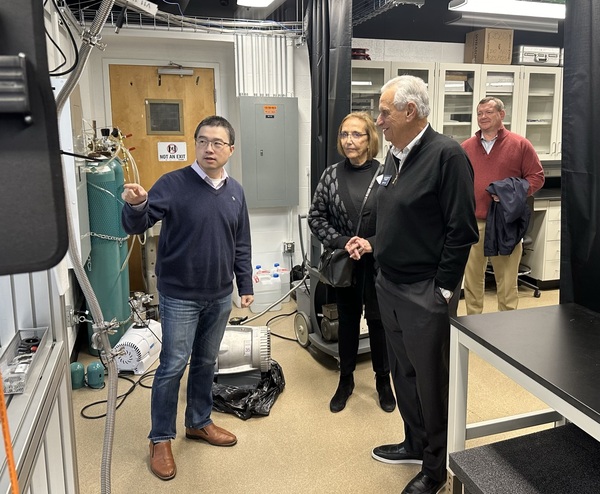
Deanna Csomo Ferrelltag:quantummatter.nd.edu,2005:News/1685612024-11-27T13:47:00-05:002024-11-28T13:47:41-05:00Linda and Bill Stavropoulos Visits the Center
This week, Linda and Bill Stavropoulos, the founding members of the center, honored us with a visit. Together with the center's director, Prof. László Forró, they visited the laboratories of Prof. Dafei Jin and Prof. Petr Stepanov.
Please find some photos taken with the founders and the faculty of the Stavropoulos Center below.
Prof. Jin's laboratory
Prof. Stepanov's laboratory
]]>
Bence Markustag:quantummatter.nd.edu,2005:News/1704012024-09-10T14:35:00-04:002025-03-02T14:35:52-05:00Jin receives DOE Early Career AwardDafei Jin, Associate Professor in the Department of Physics and Astronomy, has received an Early Career Research Program (ECRP) award from the U.S. Department of Energy (DOE).
Jin's project, which is titled "Probing Two-Dimensional Quantum Materials with Flying Electron Qubits," will be funded for five years, and is part of the Basic Energy Sciences program area.
The DOE recognized 91 early career scientists from 50 universities and 12 DOE national laboraties with this year's awards. According to the DOE, "These awards are critical to DOE’s longstanding efforts to develop the next generation of STEM leaders to solidify America’s role as the driver of science and innovation around the world."
]]>
Shelly Goethalstag:quantummatter.nd.edu,2005:News/1651462024-05-30T15:51:00-04:002024-08-17T15:53:34-04:00Publication highlight: Quantum-Device-Based Novel Coherent Terahertz Light Source (Science Advances)
Terahertz light sources are critical in advancing a wide range of scientific and technological fields due to their unique ability to probe and manipulate matter at the molecular and atomic levels. Unlike visible light, terahertz radiation can penetrate materials like plastics, textiles, and biological tissues without causing damage, making it invaluable for applications in imaging, spectroscopy, homeland security, and material characterization. Additionally, terahertz light sources are essential for the development of high-speed wireless communication systems and quantum computing technologies, where precise control of quantum states is necessary. The ability to generate and manipulate terahertz waves opens new frontiers in medical diagnostics, security screening, and fundamental research in condensed matter physics, further driving innovation in these areas.
However, the generation and control of THz radiation are technically challenging due to the "THz gap"—a region between the microwave and infrared parts of the electromagnetic spectrum where traditional techniques become less effective. This gap necessitates sophisticated and often costly equipment, such as high-power lasers and specialized nonlinear materials. As a result, THz light sources are rare and difficult to develop, making the pursuit of effective and accessible THz technology a critical area of ongoing research and development. This is especially true for so-called coherent THz sources, which behave similarly to lasers, emitting nearly monochromatic photons with similar properties. Due to their similarity to light-based LASERs (Light Amplification by Stimulated Emission of Radiation), such devices are called TASERs.
The authors of the paper described here sought a solution to this problem by investigating new materials. They demonstrated in the prestigious journal Science Advances that in nitrogen-doped diamond, a high magnetic field, and external optical irradiation create an energy structure that exhibits a population inversion similar to that found in lasers. They provided evidence for the emission of coherent terahertz radiation from this structure. The use of diamond as a system is particularly interesting as it is a very stable material that is resistant to environmental effects and has become widely used in recent years as a quantum information storage and transmission element. In addition to the experimental implementation, the authors supported the phenomenon with detailed theoretical calculations. The authors hope that the realized system will not only contribute to the development of new terahertz light sources but also serve as a building block for future quantum optical networks.
Availability of the publication:
Terahertz emission from diamond nitrogen-vacancy centers
Sándor Kollarics, Bence Gábor Márkus, Robin Kucsera, Gergő Thiering, Ádám Gali, Gergely Németh, Katalin Kamarás, László Forró, and Ferenc Simon
]]>
Bence Markustag:quantummatter.nd.edu,2005:News/1600652024-02-08T21:42:00-05:002024-02-21T09:42:56-05:00Four Notre Dame physicists receive Department of Energy grant to enhance understanding of superconductors
Four University of Notre Dame physics professors studying inversion symmetry breaking (ISB) in superconductors were jointly granted nearly $1 million from the U.S. Department of Energy for their research. Their work will contribute to the search for better superconductors that can be used in quantum technologies.
Assistant Professors Badih Assaf, Xiaolong Liu, and Yi-Ting Hsu, along with Associate Research Professor Xinyu Liu, will determine through experimental and theoretical methods how to tune and enhance Berry curvature in superconductors — materials that conduct electricity without any lost energy. Berry curvature is a twist in the quantum world that affects an electron’s behavior as it moves around or reacts to changes in its environment.
In order to do this, the researchers will synthesize and study materials that have a crystal structure that breaks inversion (up-and-down) symmetry.
Improved superconductors can allow for better energy transmission, faster electronics, more efficient transportation systems, improved medical imaging, and other benefits. Breaking the inversion symmetry will create a special type of superconductor that has a finite and large Berry curvature. Extremely rare in nature, this property may lead to the development of novel quantum electronic devices, Assaf said.
“Our project aims to reveal how the lack of symmetry, by atomic-level design, in superconductors can cause unconventional properties that may be beneficial to search for extremely rare unconventional superconductors that might be useful platforms for error-free quantum computers,” said Assaf, who, along with Xinyu Liu and Xiaolong Liu, is affiliated with NDNano.
Each researcher brings different strengths to the project. Hsu is an expert in symmetry analysis, which is a theoretical method of inferring the properties of a material from the geometric symmetries of its crystal structure. Assaf and Xinyu Liu can design and synthesize materials, and Xiaolong Liu will study these superconductors using atomic resolution scanning tunneling microscopy to extract information about their quantum mechanical electronic structure and their pairing symmetry.
The grant funds research through August 2026.
William McManus, Ph.D., contributed to this article.
Originally published by Deanna Csomo Ferrell at science.nd.edu on February 08, 2024.